
Catching has evolved a lot since baseballs beginnings. I mean catchers didn’t even have gloves in the early days.
But that was when men were men. Or when the batter could tell the pitcher where he wanted the pitch thrown. But hey, small potatoes.
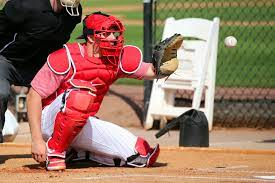
Baseball has the most athletic backstops this game has ever seen.
These guys move like cats and have bazookas for arms.
When you watch a game today you’ll notice just about every catcher is in a one knee stance.
We used to think this was just lazy. And maybe it used to be.
But there is a philosophy behind it now. At least at the Major League level.
Blocking has taken a back seat to the new pitch framing analytics. The front offices are valuing the ability to steal strikes, especially in the bottom half of the zone, over blocking and throwing.
This is in the big leagues where the stolen base is becoming more and more irrelevant.
But at the youth, high school, and even college levels, base stealing is still a huge part of the game.
Pitchers also have less control at the amateur levels.
One day I might change my tune, but right now I am not buying it. At least not for most situations.
But I did want to do my research on it. And yes I have tried it.
Having a closed mind is only going to hurt.
Here’s what I came up with.
The idea is..
Working under the ball
Start with the mitt low and bring it up into the zone.
Professional pitchers today throw so hard with nasty offspeed stuff. They are mostly working up and down whereas pitchers used to be taught to work more east and west.
Give the umpire a better view of the zone
Now this is something that I don’t believe applies to everybody. Certain catchers sit very low naturally and are shorter so I don’t see the advantage in being on a knee.
Now a guy like Joe Mauer who is 6’5” could have potentially benefitted from trying to get as low as he could. Which one knee down would certainly have benefitted him in that regard.
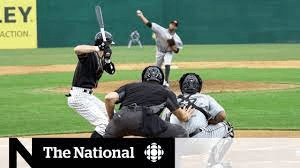
All in all though I don’t see that being on a knee really gives the umpire a better view in comparison to a traditional setup.
The knee is also the reference point for the bottom part of the strike zone for the umpire. So with the knee lower to the ground the umpire could perceive the zone to be a bit lower.
Or with the knee down opposite the side that the umpire is on, the umpire has to at least work harder because that frame of reference is on the other side of the plate.
Knee is not in the way of receiving a pitch.
For example, a ball on the inner half to a right handed hitter can handcuff a catcher. Putting your left knee down frees up the elbow to catch the ball with a little more ease.
Comfort
To me this is the biggest benefit. Guys that are asked to catch a lot can feel more fresh come the 7th & 8th inning of ball games. I find it to be less taxing on the knees and quads.
I also find receiving the pitch to be easier. Almost like I have more time.
Disadvantages
Moving
Framing the ball is receiving it in a way that the umpire perceives it as a strike.
Shifting your weight/drifting your upper half slightly to receive the pitch in the middle of your body is the most important part of framing.
Too often you see guys catching the ball and bringing it back into the zone 8-10 inches.Even at the big league level.
THIS IS NOT FRAMING.
But thats another topic.
Can you shift your weight on one knee? Yes. But not nearly as freely as you can in a traditional stance.
Blocking
It seems obvious to me. But blocking balls that aren’t right at you is very tough to do on one knee.
You limit your movement from side to side on a knee. You see blockable balls all the time in Major League games that are not blocked.
and these are the top tier catchers with the most accurate pitchers in the world.
Now take a high school pitcher. He doesn’t have the command of his curveball like a big leaguer. Even fastballs are spiked regularly at the high school level.
Catchers have to anticipate the ball in the dirt that misses by 20 inches and be able to block it.
That can be the difference in the ball game.
And a pitch that misses like that simply cannot be blocked on one knee.
You have to at least give yourself a shot.
Throwing
The unbelievably athletic catchers can throw from a knee with about the same pop time.
I haven’t heard of anyones pop top improving from being on a knee.
Like I said, in the big leagues, stolen base numbers are way down.
So pitch framing has become more important.
But at the youth level and even college levels, stolen bases are still a major part of the game.
And the traditional setup is much more effective for throwing base stealers out.
Exposure
From the one knee setup the catchers entire upper part of the leg is exposed to get smacked with a foul ball. Does it happen often? No
But just the idea hurts.
The Numbers
Guys started using the one knee setup in 2019. Maybe a handful of guys the year or two previous.
But 2021 the majority of catchers were using it.
2021 saw the highest number of Wild Pitches since 1884…when baseball wasn’t even the same baseball that we know. And catchers were wearing fingerless mittens.
Wild pitches are a pitchers fault you say.
Yes… but no.
Catchers should be blocking and catching everything right?
That’s what your coach says right. “Nothing gets through” “Be a wall!”
BECAUSE THAT’S THE JOB OF THE CATCHER. TO KEEP THE BASEBALL IN FRONT.
Using the one knee setup hinders a lot of lateral movement to catch and block balls that are out of the zone.
So to me this is a big deal
There were 1862 wild pitches in 2021.
Remember wild pitches are only recorded with a runner on base.
I just think as a catcher, the most important thing is limiting runners from advancing and scoring.
Thats the name of the game isnt it?
So all in all, YES there are benefits for the one knee setup. But to me not being able to block an 0-2 hammer in the dirt with a guy on third is inexcusable when my pitcher is working their butt off out there.
How many pitches can you really steal a game? 2 maybe 3?
I see the value in it with nobody on. But I have to put myself in the best position to limit runs.
And I still believe the traditional stance is the way to do that.
My overall take on it is that it should be used based on the situation.
Its imperative to have everything you can in your arsenal. But it should not be used in every situation (ie.a runner on third).
Most of all young catchers need to learn the body movements and fundamentals in the traditional setup.
Throwing, blocking, framing.. Young players HAVE to learn this before they go to a one knee stance as their primary setup.
Can they apply it in situations? Say nobody on nobody out and less than 2 strikes. Yes.
But using it all the time will only hinder a young backstops progression.


Leave a Reply