When you think of ball players with their careers cut short, a few names immediately come to mind
Roberto Clemente or Thurman Munson. The injuries that derailed Mantle. You think of Koufax’s press conference when he called it quits at 30. Or maybe you go to the tragic death of 24 year old Jose Fernandez.
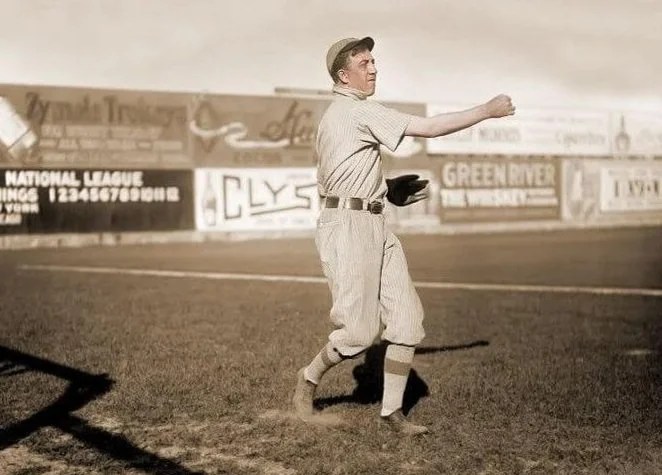
But likely you don’t think about deadball era superstar Addie Joss.
You may have never even heard of him. But he was as dominant as they come in the first 10 years of the American League.
Addie was a Wisconsin boy who lost his father at age 10 to a liver disease caused by alcohol abuse. But his mother owned a shop making and selling hats for women, which enabled her son to be able to go to school and play ball.
After high school Joss went to work as a teacher and played ball for local summer teams and then semi pro teams. Typical of the times.
After finishing strong at the end of the 1899 season for semi pro team Manitowoc he was offered a professional contract to pitch for the Toledo Mud Hens.
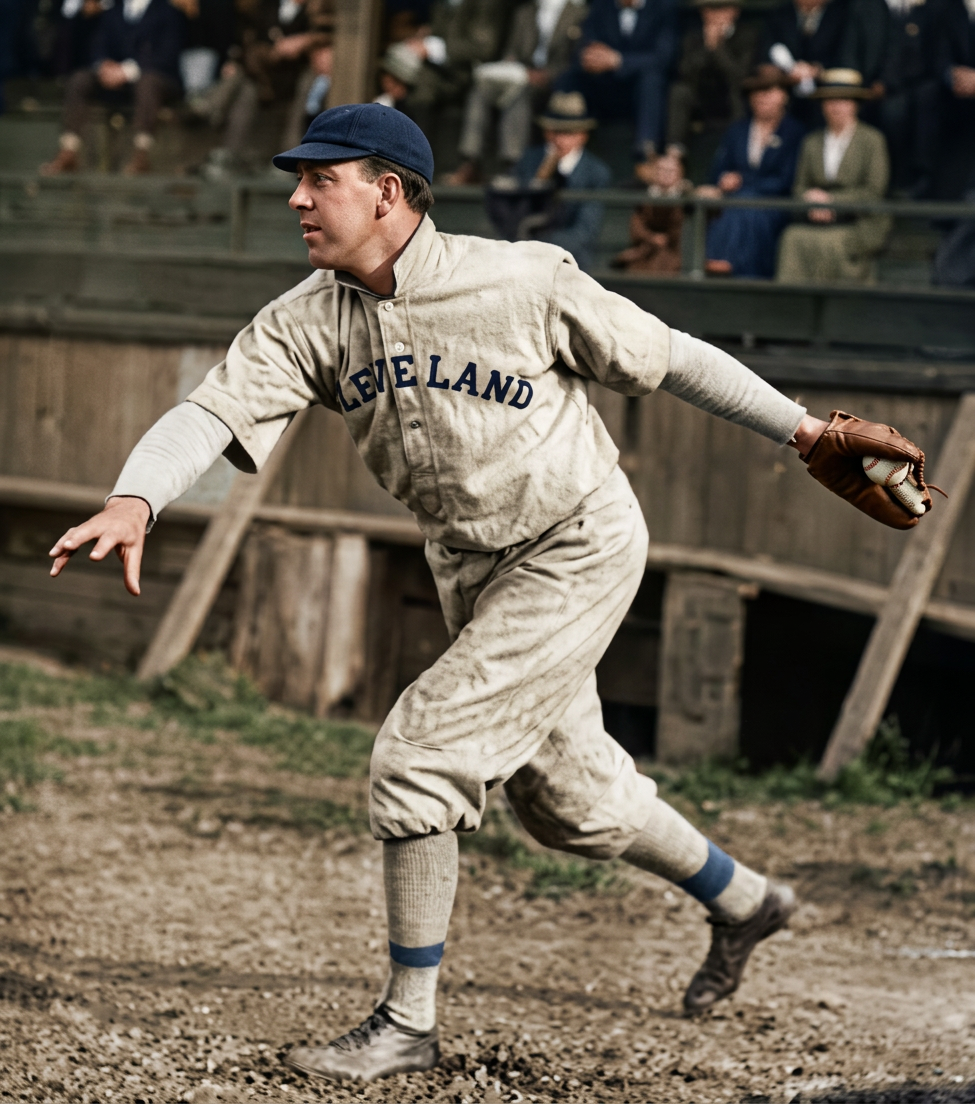
Two years later he was making his debut for the Cleveland Blues. And what a debut it was.
Using a delivery reminiscent of a deadball Hideo Nomo-turning his back completely to the hitter and slinging the ball side arm-he threw a one hit shutout striking out 5.
It was a sign of things to come.
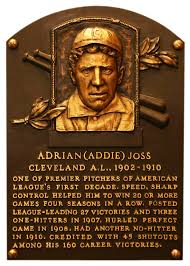
Over his career Joss tossed 7 one hitters in his career including 3 in his remarkable 1907 season, when he led the league with 27 wins.
But that may not even been his best season. The next year Joss had 24 wins leading the American League in ERA (1.16) and in WHIP (.806).
In October of that year Addie faced off against the Chicago White Sox and his AL foe Ed Walsh on October 2nd in a tight pennant race game. Joss’s Cleveland squad was just a half a game out of first.
The Sox came into the game on an 8 game winning streak just a game and half out of Detroit. So this game had World Series implications.
Ed Walsh had already won an incredible 39 games coming into the contest.
And he did what Big Ed Wash did.
He struck out 15 and gave up just one run on a wild pitch in the 3rd inning.
But it wasn’t enough. Addie Joss was better that day.
Nobody had reached base heading into the seventh, and in classic baseball fashion, no Naps player dared speak to Addie. Even in 1908, ballplayers were deeply superstitious.
“About the seventh inning, I began to realize that not one of the Sox had reached first base,” said Joss. “No one on the bench dared breathe a word to that effect. Had he done so, he would have been chased to the clubhouse. Even I rapped on wood when I thought of it. I did not try for such a record. All I was trying to do was beat Chicago, because the game meant so much to us, and Walsh was pitching the game of his life. I never saw him have so much.”
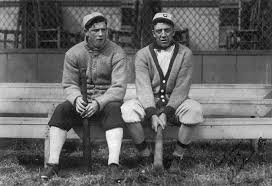
Superstitions must have prevailed for Addie that day because he did it.
On just 74 pitches he threw a perfect game. 0 runs. 0 hits. 0 walks. 0 errors. 27 up. 27 down. And beat Chicago and the mighty Ed Walsh with just a few games left in the season.
Cleveland fans went wild. Rushing the field to pick up their days hero to carry him into the clubhouse. But Joss was already thinking ahead.
“I was taking no chances,” he said. “Suppose they had let me drop. The season is not over yet.”
But the Naps couldn’t quite reach the post season, in a time when only the pennant winners made it. In any case a remarkable outing.
And not his only special day.
In his final season, in 1910 he threw a no hitter.
Run prevention is what pitchers get paid to do and Addie did that arguably better than anybody in the history of the game.
Joss still holds the all-time record for career WHIP at 0.968 and ranks second all-time in ERA at 1.887 (minimum 1,000 innings pitched).
He and his adversary Ed Walsh are the only pitchers in history with a sub 2.00 ERA and sub 1.00 WHIP.
Addie twice led the American League in ERA and only twice had a season with a WHIP above 1.00 in his career.
Every year in his 9 season career he was consistent. With the exception of 1904 when he missed some time due to illness and 1910 he pitched more than 200 innings, never having an ERA north of 2.77.
But Joss wasn’t just a great pitcher.
In the offseason, he worked as a writer for a Toledo newspaper, covering the World Series and local sports. He also helped develop an early electronic scoreboard that allowed fans to track balls, strikes, and outs—an innovation Cleveland later expanded for use in the ballpark.
But suddenly it was over.
In 1910 Joss experienced some elbow pain limiting him to half a season. We would speculate that it was a torn UCL-something that he likely pitched through.
But he was slated to come back. He was going to pitch again in May of 1911.
But on April 3rd he fainted on the field talking to his buddy.
His condition worsened and he went home to Toledo.
Two weeks later on April 14th-two days before Opening Day-Addie Joss died of tubercular meningitis.
He was just 31 years old.
Cleveland was shook. Team and city.
AL commissioner demanded the Naps play on the day of Addies funeral.
But the team declared a strike and went to Toledo to honor their beloved teammate and friend.
In July American League members particpated in an “All Star” game to raise funds for the Joss family.
Joe Wood, Cy Young, Tris Speaker, and even Ty Cobb played in the game. The game raised nearly $13,000 for Addies wife and two children.
Nine years into his career and it was suddenly over.
And it leaves you wondering…what if?
What if he had pitched another 10 years?
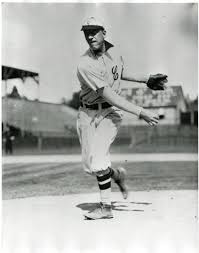
Would we talk of Addie like we talk of other deadball stars like Walter Johnson or Cy Young?
He missed bats. Had tremendous control. And was remarkably consistent.
So your next conversation about dudes that got their careers cut short, just remember Addie Joss. A Forgotten Legend.
If you like this follow this blog and follow my instagram @mr_baseball108
I will be doing more “Forgotten Legends of Baseball.”
Check out Addie’s baseball reference page as well as his SABR biography.
https://www.baseball-reference.com/players/j/jossad01.shtml
 mr-baseball.com
Leave a comment